● 進行中2026
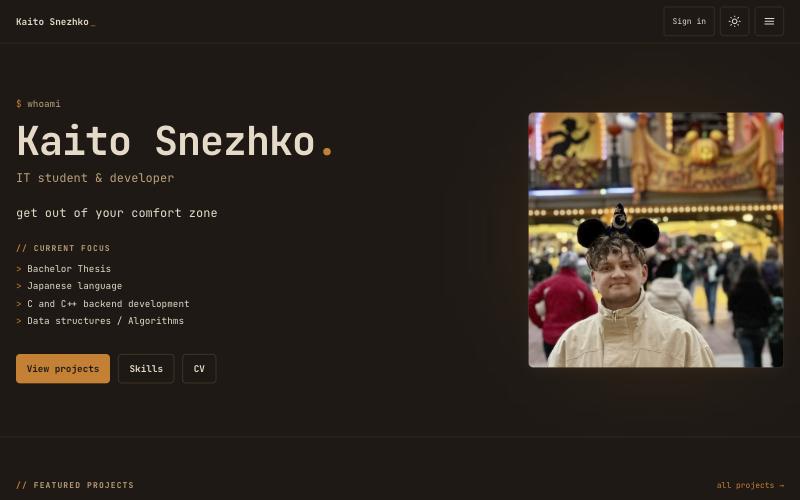
Portfolio & blog website
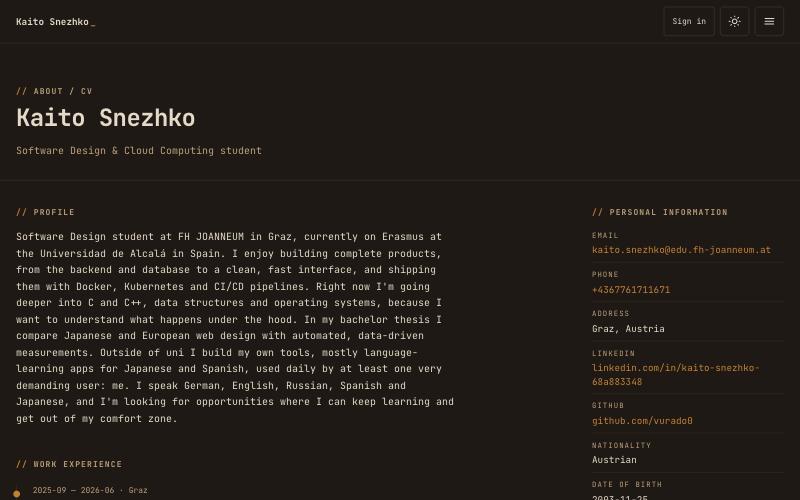
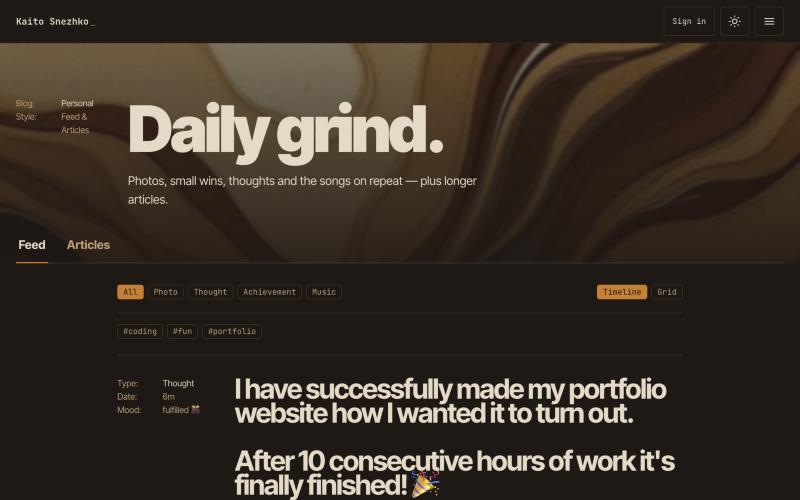
This site — a coffee-themed portfolio, know-how base and personal feed with a phone-friendly admin.
- 担当
- Solo developer & designer
- 技術スタック
- React · TypeScript · Vite · Tailwind · Firebase · Cloudinary · Vercel
Problem
I wanted one place for my CV, my IT notes and a personal feed — without paying for hosting or giving visitors' data to trackers.
Solution
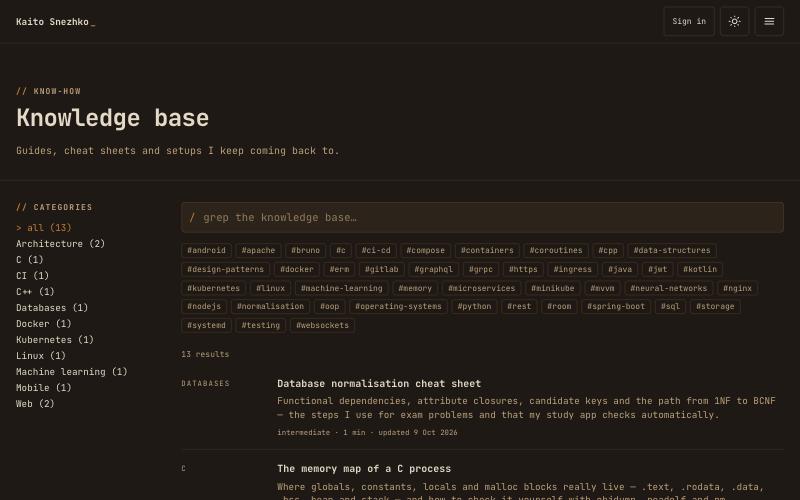
- Portfolio content lives as Markdown in the repo and is prerendered at build time.
- Feed posts are written on a private
/adminpage from my phone and stored in Firestore. - Photos go to Cloudinary through signed uploads that only my Firebase login can request; EXIF/GPS data is removed in the browser first.
- Spotify/SoundCloud players load only after a click (GDPR).
- Edit in place: after signing in, every section gets ✎ / ✕ / + controls. Changes are validated in the browser and published as one Git commit, which Vercel deploys.
Lessons learned
- Content as files beats a CMS for a portfolio. Markdown and JSON in Git give me versioning, reviews and free hosting. Editing in the browser still works, because every change is just a commit through the GitHub API.
- Prerendering matters. Rendering every page to static HTML at build time made the site fast and readable for search engines. It also forced me to keep server and client output identical, so no
localStorageduring render. - Security rules are part of the code. Firestore rules, a server-side admin check (
ADMIN_UID) and signed Cloudinary uploads mean the UI can be wrong without anything leaking. - Measure before optimising. The slow edit mode wasn't React; it was steps running one after another (code, login, database, GitHub). Running them in parallel and caching made it feel instant.
- Privacy by design is easy at the start. No trackers, self-hosted fonts, click-to-load embeds and EXIF removal were simple to build in from day one; adding them later would have been much harder.
- Small details make it feel professional. Three languages, calm animations and a working mobile layout took longer than the core features, but they're what visitors notice first.